A student activist has initiated legal action against the Trump administration to halt the deportation of individuals accused of anti-Semitic activities.
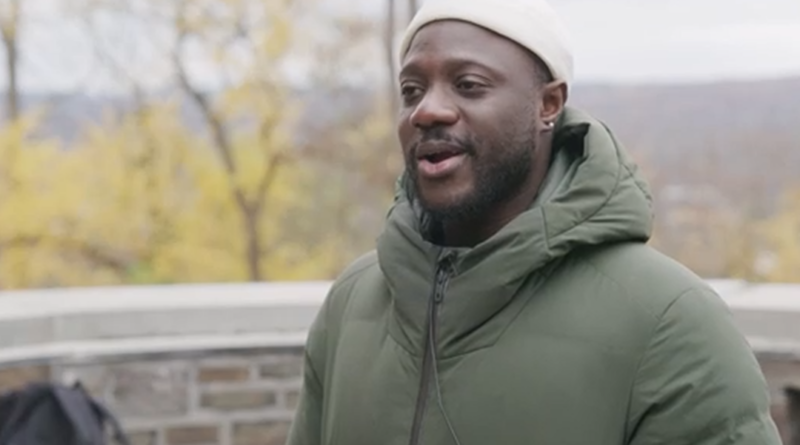
A foreign graduate student and pro-Palestinian activist at Cornell University, who has filed a lawsuit against the Trump administration to prevent the deportation of those accused of anti-Semitism, has been instructed to turn himself in to immigration authorities.
On March 21, the Department of Justice (DOJ) relayed a communication from U.S. Immigration and Customs Enforcement (ICE) directing Momodou Taal, the student, to report to the Syracuse, New York, office of the agency for detention, as stated in court documents.
Taal, who holds dual citizenship in the UK and Gambia, is among three Cornell students who filed a lawsuit on March 15 to contest two presidential orders.
These orders were enacted on January 29 by President Donald Trump. One
introduces more stringent screening and vetting procedures intended to block individuals categorized as national security threats from entering the U.S. The other
calls for, among other measures, the prosecution and removal of both citizens and noncitizens involved in anti-Semitic activities.
Taal and his co-plaintiffs argue that the cumulative impact of these orders aims to silence criticism of the Israeli government and inhibit participation in pro-Palestinian advocacy, including protests against Israel’s military actions in the Gaza Strip. In their
complaint, Taal’s legal representatives assert that he “lives in constant fear of arrest by immigration officials or law enforcement due to his speech” and is apprehensive about traveling to London to see his family.
Taal’s activism has previously stirred controversy. On October 7, 2023—the date of a violent assault on Israel by members of the Hamas terrorist organization—he
tweeted “Glory to the resistance!” accompanied by a depiction of the Palestinian flag.
In April 2024, Cornell University initially
suspended Taal due to his involvement in organizing a pro-Palestinian encampment on campus. He faced another suspension in September 2024 after disrupting a career fair that featured defense contractors L3Harris and Boeing, both known suppliers of military equipment to Israel. The university
reported that the disruption involved pushing police officers, threatening recruiters, and obstructing other students from attending the fair.
According to F-1 visa regulations, international students facing two to three suspensions are at risk of having their student visas canceled and being ordered to depart the United States. Nevertheless, Taal was eventually permitted to continue his education.
Following the DOJ email, Taal’s attorneys submitted an emergency request to a federal judge in New York to prohibit his arrest or detention, citing concerns about the alleged
presence of unidentified law enforcement near his home. As of now, the judge has yet to decide on whether to grant a temporary restraining order.
“[Taal’s detention by ICE] would significantly hinder counsel’s ability to communicate directly with Mr. Taal … and also represents an unlawful effort to eliminate this Court’s jurisdiction over this matter,” Taal’s lawyers informed U.S. District Judge Elizabeth Coombe after receipt of the DOJ email.
Taal’s case is one of several prominent deportation efforts linked to pro-Palestinian demonstrations at colleges and universities.
Recently, judges
blocked the deportation of Mahmoud Khalil, a graduate student from Columbia University and a
protest organizer; and Badar Khan Suri, a postdoctoral fellow at Georgetown University. Federal officials have loosely accused Khalil of participating in “activities aligned with Hamas” and have accused Suri of “disseminating Hamas propaganda,” “promoting antisemitism on social media,” and maintaining “close connections” with an unnamed Hamas advisor.
In each of these situations, immigration organizations have referenced a provision of U.S. immigration law that
permits the deportation of noncitizens if the secretary of state has credible evidence that their presence or actions in the United States could lead to “potentially serious adverse foreign policy consequences” for the nation.